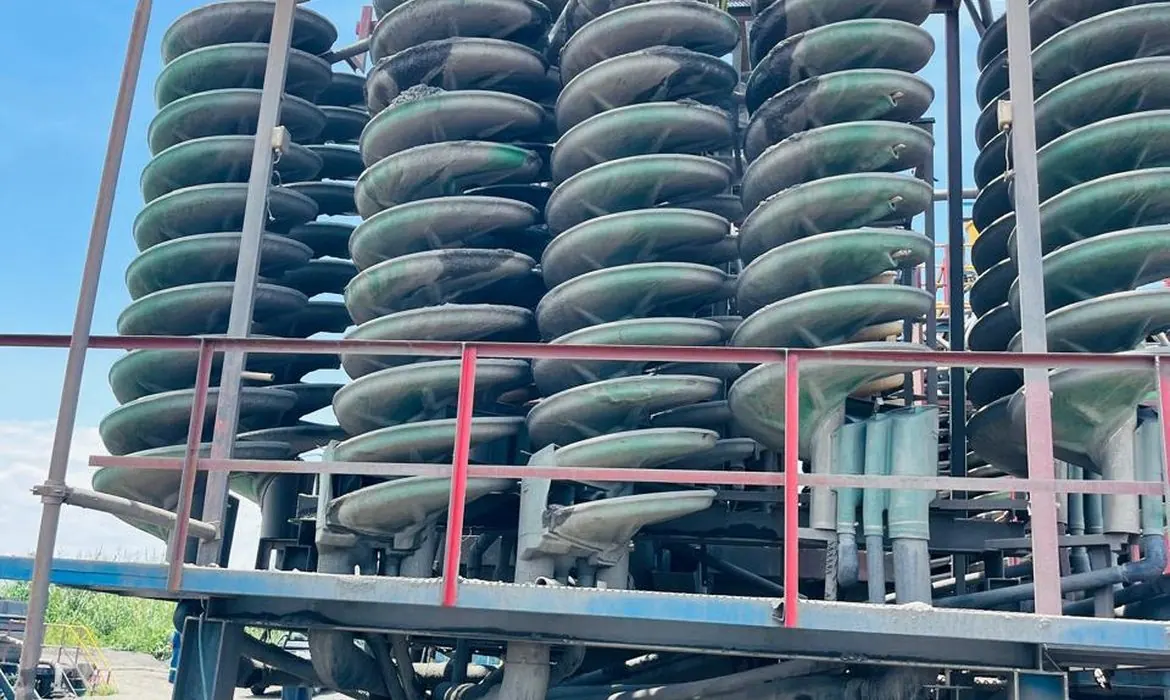


Joint ventures and a strong regional presence let us offer
tailored on-site support across South Africa.

Material
Flow rate
Lining type
Connections
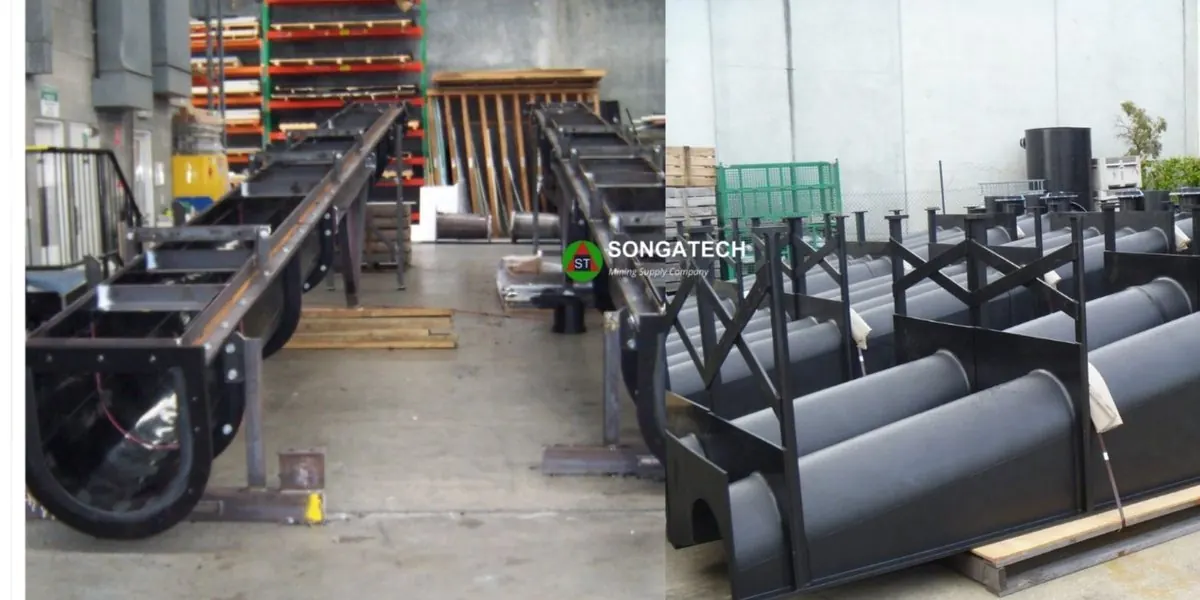
Songatech manufactures slurry launders and distributors (splitter boxes) for mineral processing plants, in mild steel, stainless steel or rubber-lined steel with ceramic, polyurethane or rubber linings, for flows from 50 m³/h to over 5 000 m³/h. Every unit is custom-sized to your flow rate and outlet count and built at our facility in Alrode, Alberton (Gauteng), for plants across South Africa.
| Product | What it does | Construction options |
|---|---|---|
| Slurry distributors (splitter boxes) | Split one feed into several outlets with fixed or adjustable splits | Typically rubber or ceramic lined |
| Flotation launders | Collect froth and discharge concentrate | Smooth internal surfaces to limit turbulence; stainless steel recommended |
| Concentrate and tailings launders | Carry product and waste by gravity over long periods | Square, round or custom profiles; PU, ceramic or rubber lined |
| Custom fabricated launders | Fit an existing plant layout | Built to your drawing, elevation and tie-in points |
| Specification | Songatech launders and distributors |
|---|---|
| Body materials | Mild steel, stainless steel or rubber-lined steel |
| Lining options | Ceramic, polyurethane (PU) or high-grade rubber, replaceable |
| Flow rates | 50 m³/h to over 5 000 m³/h |
| Sizes | Custom designed to the flow rate and number of outlets |
| Connections | Flanged, spigot or flexible hose |
| Quality checks | Dimensional accuracy and flange alignment; fabrication certificates with every order |
| Applications | Cyclone feed distribution, flotation launders, concentrate and tailings transfer |
Start with the unit's position in the plant, then choose the lining from the slurry, then confirm the hydraulics.

Installation detail decides whether a distributor splits evenly. In a common radial design the feed enters a central well, loses its velocity, and overflows a circular weir into equal outlet compartments. If the box is not level, the low side takes more flow, so set it level on installation and recheck it after any structural work. Keep the inlet straight and free of sharp bends just upstream, because a jet entering off-centre pushes more slurry to one side.
| Lining | Best at | Watch out for |
|---|---|---|
| Ceramic | Severe sliding abrasion and high-wear zones such as splitter box floors and impact points | Heavy; brittle under large impacts if not backed and fixed correctly |
| Polyurethane | Sticky or corrosive slurry, fine abrasive solids, low build-up | Hot slurry and some solvents and oils |
| Rubber | General abrasion by fine to medium particles, corrosive water | Sharp, coarse particles and oils can cut or swell it |
Industry context: these are the common rules of thumb for the three lining families. Our ceramic tiles and wear protection page covers the ceramic linings in more depth, and alumina ceramic wear tiles explains tile grades.
Launders often discharge to cyclones and pumps. See our hydrocyclones and slurry pumps for the rest of the circuit.
A slurry distributor, or splitter box, takes one slurry feed and divides it between several outlets, with fixed or adjustable splits. It is used to feed parallel equipment such as cyclone banks, flotation lines or spiral banks evenly.
A launder is an open channel that carries slurry or froth by gravity from one point to another. A distributor splits a single flow into several outlets. Many plants use both: a launder delivers slurry to a distributor, which then feeds parallel units.
Use rubber for general abrasion, ceramic for severe wear and polyurethane for sticky or corrosive slurries. Splitter boxes on cyclone feed are usually ceramic lined, flotation launders stainless steel, and tailings launders PU or rubber lined.
Songatech units are designed for 50 m³/h to over 5 000 m³/h, with each unit sized to your flow rate and outlet count.
Yes. Custom fabricated launders are built to your drawing and layout so they match your plant elevation and tie-in points, with flanged, spigot or flexible hose connections.
Compare the operating pressure of each cyclone in a bank, or time and weigh a sample cut from each outlet. Large differences between outlets, uneven wear on the units downstream, or one unit roping while another runs light all point to an uneven split.
Send your flow rate, slurry data and drawings through our contact page or the form below for a launder or distributor quote.
Send us the product, quantity and site. For linings and nozzles, include drawings or dimensions and we will match them to your equipment.