
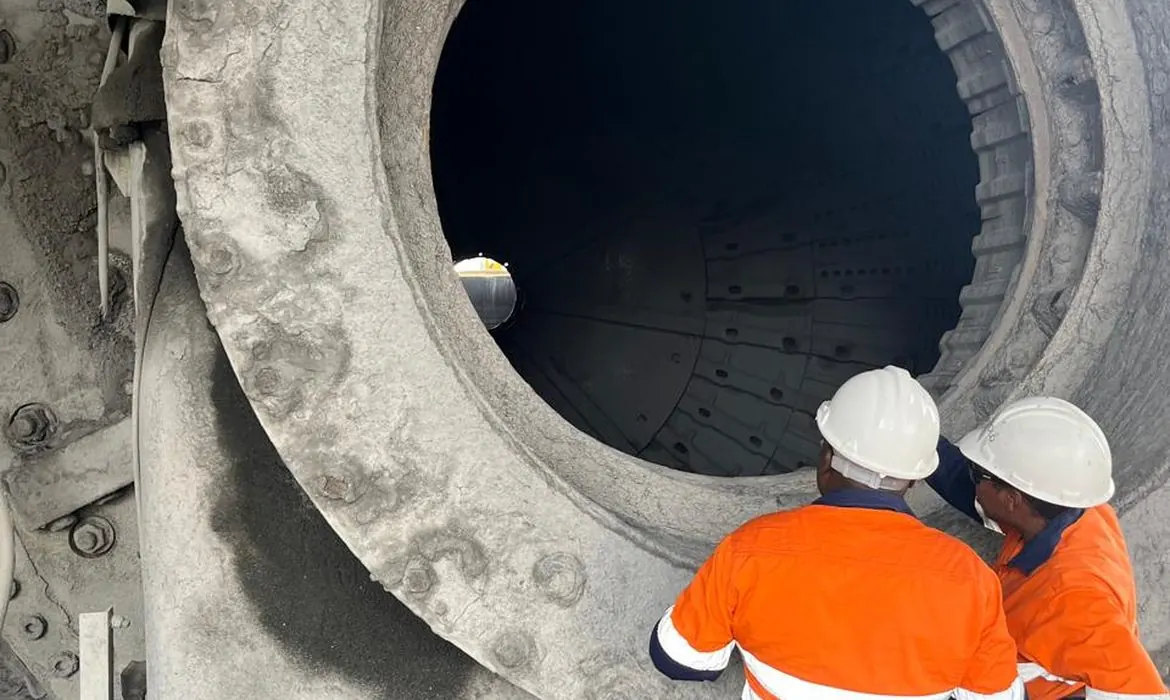
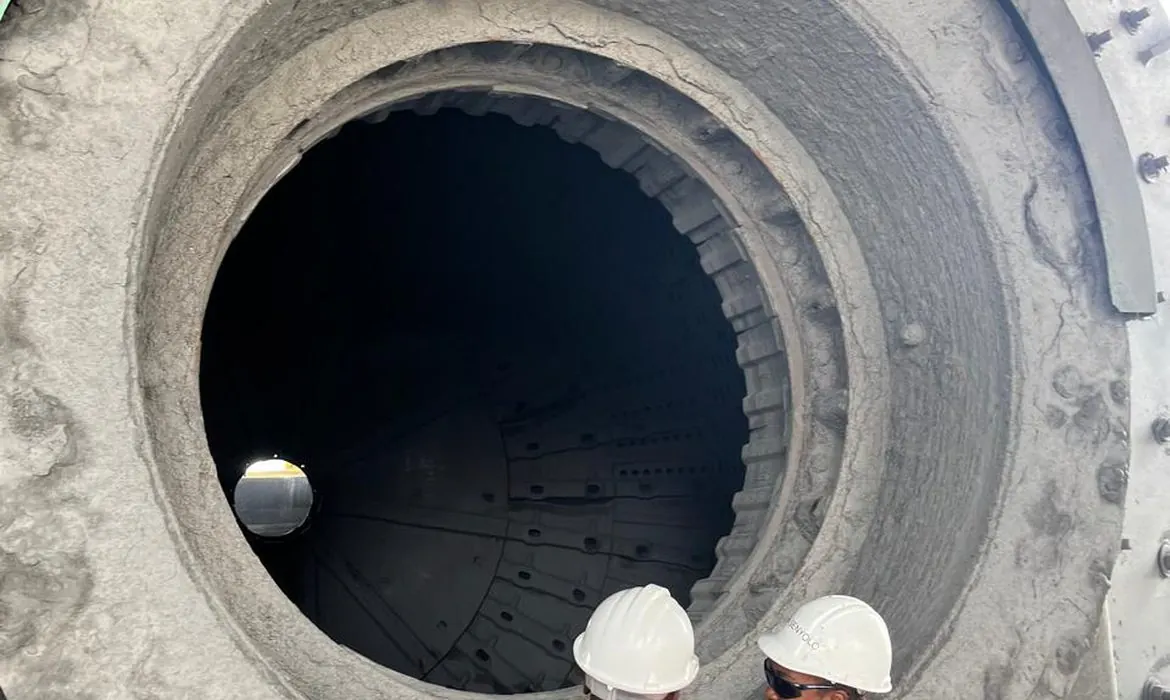
Joint ventures and a strong regional presence let us offer
tailored on-site support across South Africa.

Diameter
Length
Hardness
Straightness
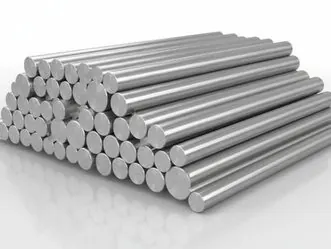
Songatech supplies steel milling rods (grinding rods) in 40 mm to 100 mm diameters and standard lengths of 3.0 m to 6.2 m, in 65Mn and B2 high-tensile steel at 45-55 HRC. The rods are straightened to 3 mm per metre or better and delivered in bundles from Alrode, Alberton, to rod mills across South Africa and the SADC region.
Every rod is heat-treated for a uniform hardness from surface to core, so it wears down evenly instead of tapering, and is hot-rolled and deburred. We supply four rod types:
| Rod type | Diameter | Best application | Why |
|---|---|---|---|
| Manganese alloy rods | 75-100 mm | Primary rod milling, heavy ore loads | High impact toughness |
| High carbon steel rods | 40-60 mm | Finer rod milling | Higher abrasion resistance at smaller diameter |
| Chrome-moly alloy rods | On request | Highly abrasive ores such as quartz-rich feed | Longer wear life than standard carbon steel |
| Special alloy or galvanised rods | On request | Corrosive process water or acidic ore | Control corrosion where it sets the wear rate |
| Specification | Songatech milling rods |
|---|---|
| Material grade | 65Mn / B2 high-tensile steel |
| Standard diameters | 40 mm to 100 mm |
| Standard lengths | 3.0 m to 6.2 m, custom lengths on request |
| Hardness | 45-55 HRC, consistent from surface to core |
| Straightness | 3 mm per metre or better, laser-aligned |
| Finish | Hot-rolled and precision deburred |
| Testing | Ultrasonic flaw detection; spectrographic chemical analysis per batch |
| Traceability | Batch traceability labels on every bundle |
| Delivery | Bundled, across South Africa and the SADC region |
Industry context: rods are run softer than grinding balls (balls are commonly 55-65 HRC) on purpose. A rod that is too hard snaps once it has worn thin, and short broken pieces are the usual start of rod tangling. A rod that is too soft bends. The 45-55 HRC through-hardness range is the working compromise.
Work through four decisions in order: diameter, length, steel, and handling.
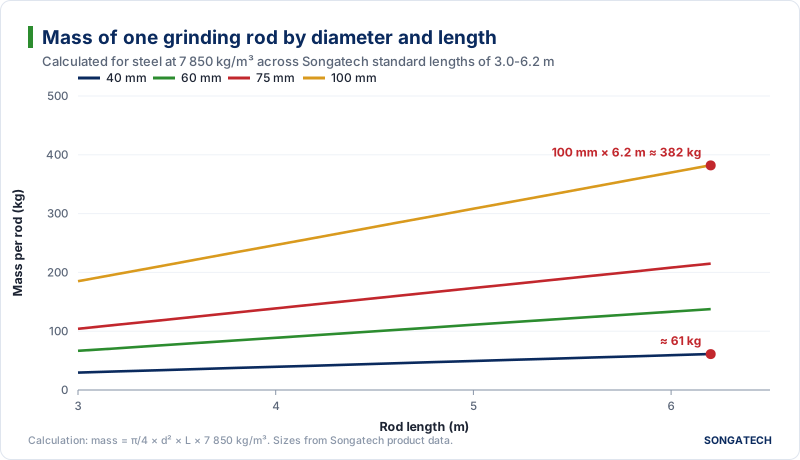
Example: a mill taking 100 mm rods at 6.0 m uses rods of about 370 kg each, so a 10-tonne addition is roughly 27 rods. A 60 mm rod of the same length weighs about 133 kg.
Three quick checks on delivery protect the mill. First, lay a sample of rods on a flat surface and check bow with a straight edge or string line: anything worse than 3 mm over a metre should be set aside and reported. Second, confirm that the bundle labels match the batch numbers on the chemical analysis. Third, store bundles on level supports spaced closely enough that long rods cannot sag, because a rod bent in the yard goes into the mill bent. Keep different diameters and steels in separate, marked bays so the wrong rod is not charged.
Rod mills give a coarse grind with fewer slimes than a ball mill, which is why they are used ahead of gravity and magnetic separation.
Most rod mill circuits finish the grind with balls. For the second stage, see our grinding balls supply range.
Songatech supplies steel milling rods from Alrode, Alberton, in 40 mm to 100 mm diameters and 3.0 m to 6.2 m standard lengths, with custom lengths on request. Delivery covers South Africa and the SADC region.
Our rods are 65Mn / B2 high-tensile steel, heat-treated to 45-55 HRC from surface to core. Manganese alloy, high carbon, chrome-moly and special alloy or galvanised options cover impact, abrasion and corrosion duties.
Tangling usually starts with bent or broken rods, rods that are too short for the mill diameter, or a low rod charge. Straight rods (3 mm per metre or better), even hardness so rods do not snap when thin, and the right length for the mill are the main controls.
Yes. Standard lengths are 3.0 m to 6.2 m and custom lengths are available on request. Send the mill inside length between head liners and we will quote the rod length that leaves the required end clearance.
Mass depends on diameter and length. A 100 mm rod 6.0 m long weighs about 370 kg, a 75 mm rod about 208 kg and a 40 mm rod about 59 kg, based on steel at 7 850 kg/m³.
Use 75-100 mm manganese alloy rods for primary grinding of coarse, hard feed and 40-60 mm high carbon rods for finer grinding. Feed size and ore hardness refine the choice through the Bond rod size formula.
Send your mill size and current rod details through our contact page or the form below for a milling rod quote.
Send us the product, quantity and site. For linings and nozzles, include drawings or dimensions and we will match them to your equipment.