
- 6 Flamink Road, Alrode, Alberton
- admin@songatech.co.za
- 100% Black-owned, Level 1 B-BBEE
Iron Ore Gravity Spirals: Performance and Troubleshooting Guide for South African Projects

17May
Iron Ore Gravity Spirals: Performance and Troubleshooting Guide for South African Projects
Iron ore gravity spirals lose grade or recovery for a short list of reasons: wrong feed rate per start, wrong feed density, oversize or slimes in the feed, splitters set wrong, worn troughs, or unliberated ore. This guide sets out how iron ore spirals should run, how to measure their performance with three assays, and the order in which to check a bank that is underperforming. It applies to hematite fines plants and to spiral circuits treating jig or dense medium undersize.
Where spirals fit in iron ore beneficiation
Northern Cape hematite operations rely mainly on dense medium separation and jigging for lump and coarse fines. Spirals take over where those processes stop working, on fines below about 1 to 2 mm, and in plants that retreat fines or slimes dumps. For magnetite ores, low-intensity magnetic separation is usually the first choice and spirals play a supporting role.
| Mineral | Formula | Specific gravity (typical) | Fe content | Spiral behaviour |
|---|---|---|---|---|
| Hematite | Fe2O3 | 5.26 | 69.94% | Reports strongly to concentrate |
| Magnetite | Fe3O4 | 5.18 | 72.36% | Reports to concentrate; magnetic separation usually preferred |
| Goethite | FeO(OH) | About 3.3-4.3, lower when porous | 62.85% | Porous grains behave lighter and drift to middlings |
| Quartz and chert | SiO2 | 2.65 | 0% | Main reject; easily separated when free |
| Kaolinite (clay) | Al2Si2O5(OH)4 | About 2.6 | 0% | Mostly in slimes; removed by desliming |
The density contrast between hematite and quartz is high, so free silica is rejected well even at fine sizes. Alumina is harder. Most of it sits in clays, which report to slimes and are removed at the desliming cyclone. Alumina locked inside goethite or ochreous hematite cannot be rejected by any gravity method.
How iron ore spirals are set up
Songatech iron ore spirals use profiles designed to reject silica and alumina while holding Fe recovery, and suit rougher-cleaner circuits with a middlings recycle. The standard starting point for an iron ore rougher is a 7-turn, double-start module for 0.3 to 2.0 mm feed with moderate wash water. Across the range, Songatech spirals take 0.1 to 3.0 mm feed (optimum 0.3 to 2.0 mm) at approximately 0.3 to 4 t/h per start, on a fibreglass body with polyurethane or ceramic wear surfaces.
The product target sets how hard the cleaning must be. The chart below shows the Fe ceiling for a concentrate as a function of its gangue content.

Two practical points follow. To reach a 65% Fe product from hematite, total gangue in the concentrate must be under about 7%. And if the ore carries significant goethite, that ceiling drops: a pure goethite concentrate is only 62.85% Fe. Before blaming the spirals for low grade, check the mineralogy of the concentrate.
Measuring spiral performance with three assays
Recovery can be calculated without weighing any stream, using the Fe grade of the feed (f), concentrate (c) and tailings (t): Recovery = 100 × c(f - t) / [f(c - t)]. Mass yield to concentrate is 100 × (f - t) / (c - t).

The curves show why tailings grade is the number to watch. At a 55% Fe feed and a 65% Fe concentrate, every 5% rise in tailings Fe costs roughly 4 to 8 percentage points of recovery, and the loss grows as tailings grade climbs. Take the three samples at the same time, with a full-width cutter across each stream, and repeat over several hours before drawing conclusions. For a bank, sample several starts and combine them, because one start can hide a distributor fault.
Choosing the circuit: one stage or more
The number of spiral stages follows from the gap between feed grade and the product target.
- Single rougher stage. Suits feeds already close to specification, where the job is to lift grade by a few percent and reject coarse free silica.
- Rougher-cleaner with middlings recycle. The common layout for hematite fines. The rougher is set for recovery, the cleaner for grade, and cleaner middlings return to rougher feed.
- Rougher-cleaner-scavenger. Added when rougher tailings still carry enough Fe to pay for another pass, which the recovery chart above helps quantify.
Each added stage needs pumping or height, more distributor nozzles and more sampling points, so test the extra recovery against those costs before adding one.
Troubleshooting an underperforming bank
Work through the checks in order. The first three cost nothing but a bucket, a stopwatch and a density scale, and they find most problems.

Symptoms, causes and fixes
| Symptom | Likely cause | Check | Fix |
|---|---|---|---|
| Low concentrate grade, normal recovery | Overloaded starts, or concentrate splitter too far out | Flow per start; splitter position | Reduce feed or add starts; move splitter inward one step |
| High Fe in tailings | Feed too dilute, slimes in feed, or splitter too far in | Feed density; % below 75 µm in feed | Raise density; improve desliming; move splitter outward |
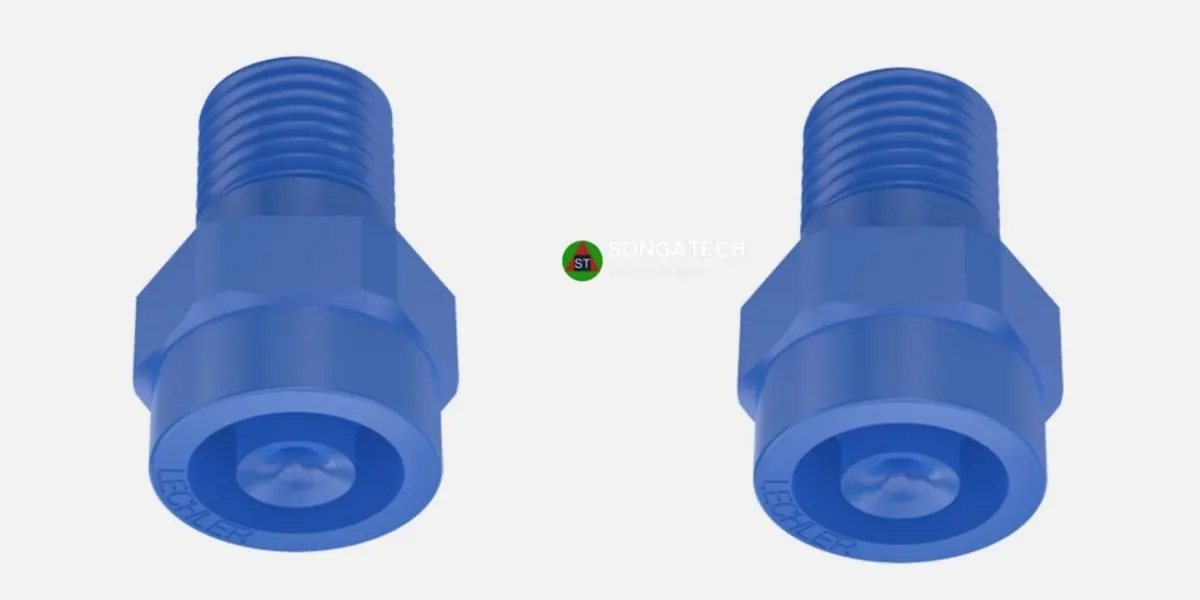
| Some starts good, some poor | Uneven distribution | Timed bucket fill per outlet | Replace worn distributor nozzles; level the distributor |
| Coarse hematite in tailings | Oversize above about 2 mm rolling outward | Screen analysis of tailings | Tighten screen aperture ahead of spirals; send oversize to jigs |
| Grade drifts down over months | Worn trough profile at the inner band | Liner thickness at marked points | Reline or replace trough sections |
| High middlings load, poor cleaner grade | Locked hematite and silica | Assay middlings by size | Regrind middlings before recycling |
| Sanding or overflow at the feed box | Feed too dense or flow too high | Density and flow at the feed box | Dilute in the pump box; check feed hose size |
Feed rate and feed density
These two variables set the thickness and speed of the film on the trough. If rate is too high, the film is deep and fast, and hematite is carried outward into middlings and tails. If it is too low, quartz settles into the concentrate band. Feed density works the same way: dilute feed moves too fast for fine hematite to settle; overly dense feed cannot stratify. Set both during commissioning and hold them, with the pump box level and pump speed under control.
Feed size and slimes
Spirals tolerate a size range, but not an unlimited one. Coarse particles above about 2 mm roll over the bands regardless of density, while slimes below about 75 µm raise viscosity and carry fine hematite with them. Good desliming with hydrocyclones is often the cheapest recovery gain in an iron ore fines plant.
Splitters, ports and wash water
Record splitter positions on a set-up sheet for each bank and audit them weekly. A splitter knocked out of position during cleaning is a common cause of a sudden grade drop. Where wash water is used, check the rings are clear: blocked wash-water holes let quartz stay in the concentrate band.
Trough wear and alignment
Hematite is dense and abrasive, so wear concentrates at the feed box and along the inner concentrate band. A worn floor deepens the inner band and moves the cut. Measure liner thickness at fixed points at each shutdown, and check columns are plumb, because a leaning column shifts the flow across the trough. Feed and product lines from the spirals should be lined; see the lined slurry launder guide.
When spirals are not enough
If the bank is in specification on every check and the grade or recovery is still short, the limit is the ore, not the spiral. Most commonly, the value is in hematite below about 75 µm, which needs magnetic separation (such as WHIMS) or flotation, or the gangue is locked with hematite and needs regrinding. Spirals compared with other gravity devices are covered in the spiral concentrator selection guide.
What to send for an iron ore spiral quote or audit
- Feed source (jig or DMS undersize, ROM fines, slimes dump) and dry tonnage
- Size distribution with Fe, SiO2 and Al2O3 by size fraction
- Recent feed, concentrate and tailings assays from the existing bank, if any
- Concentrate specification (Fe, SiO2, Al2O3)
- Current starts, profile type, splitter settings and feed density
- Photos of trough wear at the feed box and inner band
Frequently asked questions
What Fe grade can iron ore spirals produce?
That depends on the mineralogy. Hematite with free quartz can be upgraded to 65% Fe or more if gangue in the concentrate is held below about 7%. Goethite-rich ore is limited to below 62.85% Fe, because that is the Fe content of pure goethite.
Why do my spirals reject silica but not alumina?
Free quartz is much lighter than hematite and separates easily. Alumina sits mostly in clays, which should be removed by desliming, or inside goethite and ochreous hematite, where no gravity method can remove it.
How do I calculate spiral recovery without weighing the streams?
Use the two-product formula with Fe assays of feed (f), concentrate (c) and tails (t): recovery = 100 × c(f - t) / [f(c - t)]. Sample all three streams at the same time and repeat several times for a reliable figure.
What is the right feed rate for an iron ore spiral?
Songatech spirals cover approximately 0.3 to 4 t/h per start, and iron ore roughers run toward the upper part of that range because hematite is dense. The exact rate comes from commissioning: increase feed until concentrate grade starts to drop, then back off.
Can spirals treat magnetite ore?
Yes, magnetite reports to the concentrate like hematite. Most magnetite plants use low-intensity magnetic separators as the main step, though, because they are cheaper and more selective for magnetite.
For iron ore profiles and spares, see the Songatech spiral concentrators range, or send your assays and feed data through the contact page for a quote or bank review.
Related Songatech products


Latest Posts


Request a quote
Tell us what your plant needs.
Send us the product, quantity and site. For linings and nozzles, include drawings or dimensions and we will match them to your equipment.
- 010 555 0828 | 083 597 3427
- admin@songatech.co.za
- 6 Flamink Road, Alrode, Alberton