



Joint ventures and a strong regional presence let us offer
tailored on-site support across South Africa.

Northern Cape iron ore and manganese plants are built around heavy, abrasive ore and very large tonnages. Iron ore is crushed, washed and screened, then upgraded by dense medium separation with ferrosilicon and by jigging. Manganese ore is mostly crushed and screened to size, with gravity upgrading at some mines. The consumables that wear fastest are screen panels, chute linings, conveyor belts, DMS medium and pumps. This page maps those stages to Songatech products.
South Africa's iron ore comes mainly from the Northern Cape, around Kathu (Sishen) and Postmasburg (Kolomela and Beeshoek). The ore is hard haematite, and the plants produce lump and fines for export along the Sishen to Saldanha railway.
Manganese comes from the Kalahari Manganese Field around Hotazel, north-west of Kuruman, which holds over 77% of the world's known land-based manganese reserves. The field has two main ore types: Mamatwan-type ore at about 30 to 38.5% Mn and higher grade Wessels-type ore at about 42 to 60% Mn. For towns and distances see mining supplies in the Northern Cape.

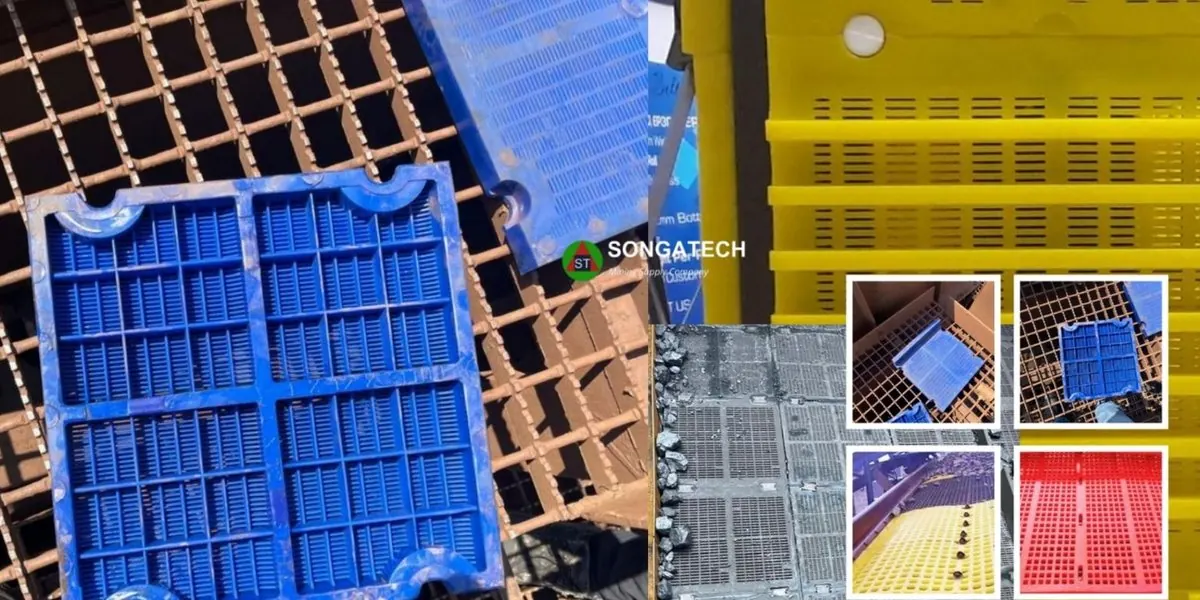
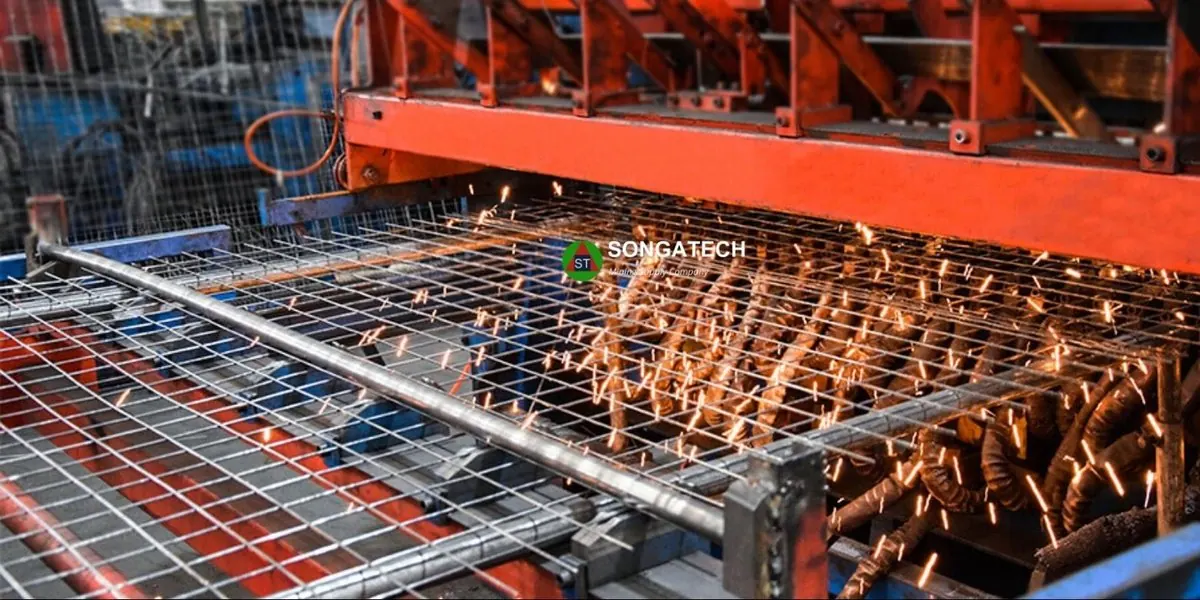
Published descriptions of Sishen give a clear picture of a large Northern Cape plant: ore is crushed, washed and wet screened into coarse, medium and fine fractions, then treated by DMS and jigs. Dense, angular haematite is hard on everything it touches. Top decks of sizing screens take heavy impact, so rubber impact panels or spring steel mesh go near the feed box, with polyurethane panels further down the deck. Songatech screen panels cover 0.3 to 120 mm apertures in modular, bolt-down and tensioned formats, and spring steel wire mesh is recommended for primary scalping at 25 to 120 mm.
Iron ore is separated at a high density, well above what magnetite can reach, so the medium is ferrosilicon. Sishen's DMS plant produces a lump product at about 65% Fe, and Kumba and Exxaro have also piloted ultra-high-density DMS. Ferrosilicon is expensive, so medium losses on drain and rinse screens and magnetic separators matter. Songatech gas-atomised ferrosilicon is supplied in Coarse grade for drums and baths, Fine grade and Cyclone 40 or Cyclone 60 blends for cyclones, and DMS 70 for very high densities above SG 3.4, packed in 1 t bulk bags or 250 kg drums with a certificate of analysis. Our guide to atomised ferrosilicon for DMS cyclones covers grade selection and medium control.
Sishen's jig plant, opened in 2008, treats ore that does not go through DMS and produces lump at about 64% Fe. Kumba has studied recovering the 0.2 to 1 mm fraction of jig feed that is currently discarded, which is the size range where spirals work well. Songatech iron ore spirals use profiles aimed at rejecting silica and alumina while holding Fe recovery, in rougher and cleaner circuits with middlings recycle. See our iron ore spirals troubleshooting guide.
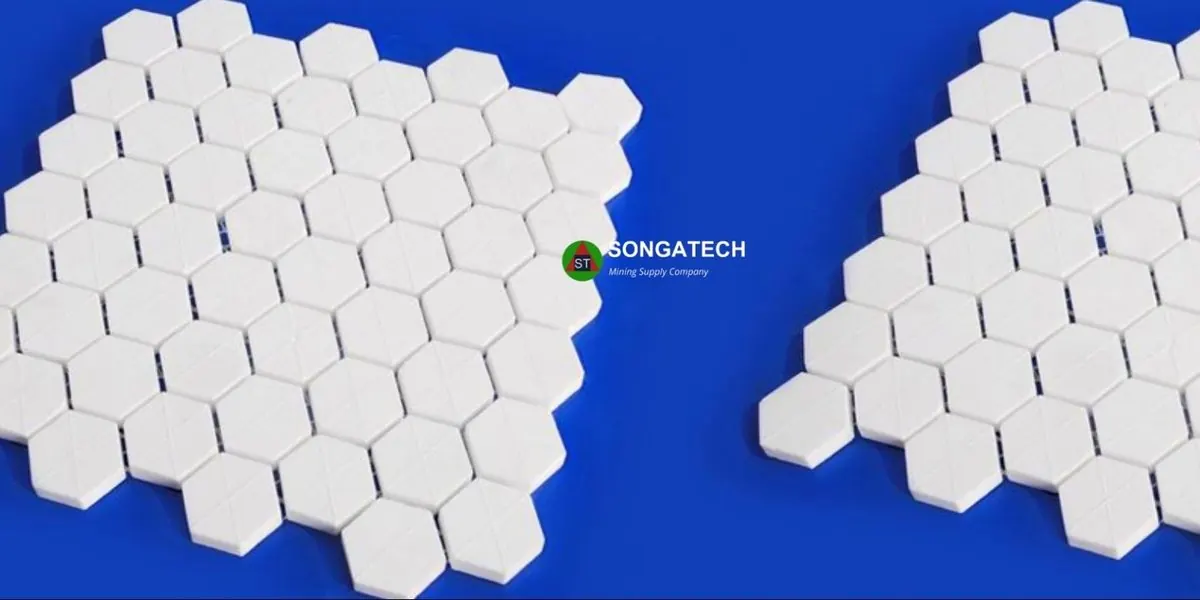
Most Kalahari manganese plants are simpler than iron ore plants: ore is crushed and screened into lumpy and fines products, and some mines add gravity upgrading to remove banded iron formation waste. Tshipi Borwa, south-west of Hotazel, for example, combines crushing and screening with a gravity separation system. Product leaves by rail or road for the coastal ports. The wear problems are the same in kind as iron ore: abrasive fines on screen decks, chute and transfer point wear, and belt wear on long conveyors. Alumina ceramic tiles and weldable ceramic plates suit hoppers and chutes, with ZTA at transfer points where lumps drop.
| Stage | Typical equipment | Wear or consumable problem | Songatech products that fit |
|---|---|---|---|
| Crushing | Gyratory, jaw and cone crushers, apron feeders | Chute and hopper wear from dense, hard ore | Weldable ceramic plates and ZTA, electrical motors |
| Scalping and sizing | Heavy duty vibrating screens, scrubbers | High impact on top decks, aperture wear on bottom decks | Rubber impact panels and PU panels, spring steel mesh |
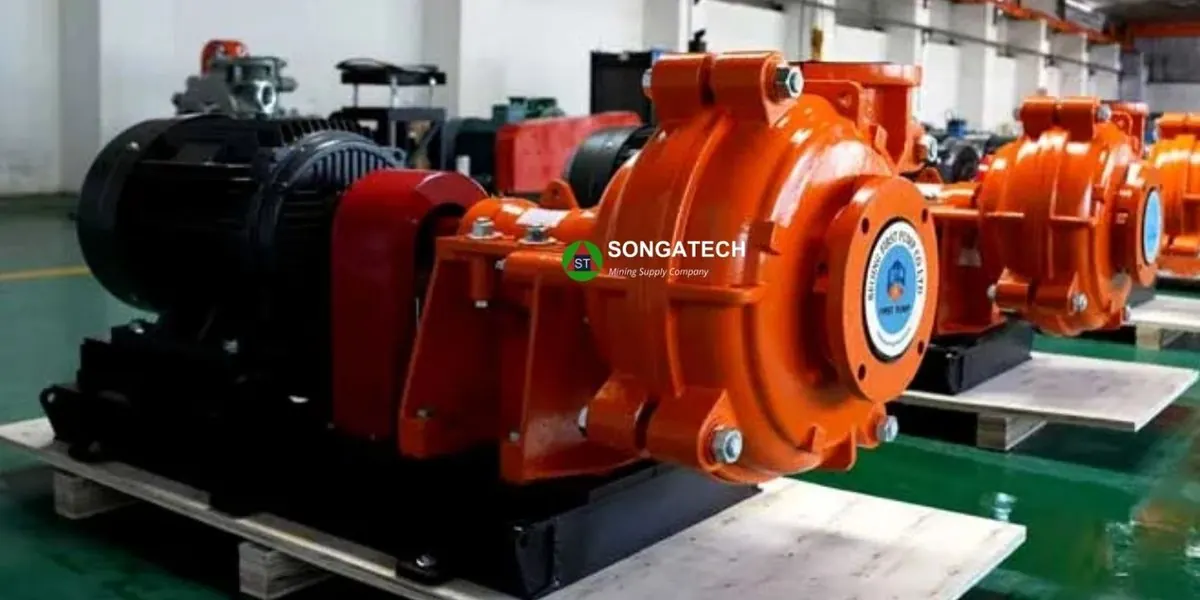
| Dense medium separation | DMS drums or cyclones, medium sumps and pumps | Ferrosilicon losses, cyclone and pump wear | Ferrosilicon powder, slurry pumps, ceramic linings |
| Medium recovery | Drain and rinse screens, magnetic separators | Panel wear lets medium escape with product | Slotted PU and wedge wire panels |
| Fines upgrading | Classifying cyclones, spirals | Cut point drift, trough wear | PU hydrocyclones, iron ore spirals, distributors |
| Stockpiling and load-out | Overland and plant conveyors, stackers, rail loading | Belt cover wear and cuts, chute wear | Steel cord and fabric belts, chute linings |
| Manganese crushing and screening | Crushers, sizing screens, gravity upgrading at some mines | Very abrasive fines, screen and chute wear | Screen panels, wire mesh, ceramic tiles |
Iron ore is separated at a much higher density than coal. Magnetite cannot make a stable medium at those densities, while ferrosilicon can, so ferrosilicon is the standard DMS medium for iron ore and diamonds.
It depends on the separator and the target density. Coarse grade suits drums and baths; Fine, Cyclone 40 and Cyclone 60 suit cyclones at about SG 2.8 to 3.4; DMS 70 suits very high densities above SG 3.4. Send your target density and separator type.
Yes, on fine fractions, typically below about 2 mm, where DMS and jigs become less efficient. Iron ore spiral profiles are designed to reject silica and alumina while holding Fe recovery.
Many Kalahari manganese operations crush and screen to lumpy and fines products, and some add gravity separation to remove banded iron formation waste. The approach depends on the ore type and product grade.
Alumina ceramic suits sliding abrasion. At transfer points with heavy drops, ZTA tiles, rubber backed ceramic or weld-on ceramic plates are more resistant to cracking.
For ferrosilicon, screen panels, wire mesh or wear linings for an iron ore or manganese plant, send your duty details through the Songatech contact page or browse all mining products.
Send us the product, quantity and site. For linings and nozzles, include drawings or dimensions and we will match them to your equipment.