


Joint ventures and a strong regional presence let us offer
tailored on-site support across South Africa.

A South African coal washing plant uses dense medium separation with magnetite to clean the coarse coal, spirals to clean the fines, and a long chain of screens, cyclones, pumps and conveyors to move and dewater everything in between. Each of those stages wears out specific consumables. This page walks through a typical Mpumalanga or Waterberg flowsheet and shows which Songatech products are used at each stage.
Most South African coal comes from the Witbank and Highveld coalfields around eMalahleni, Middelburg, Kriel and Secunda, with further production around Ermelo, in the Waterberg near Lephalale, and in the Vaal area around Sasolburg. Export thermal coal shipped through Richards Bay must meet a calorific value and ash specification that most run-of-mine coal from these seams cannot reach without washing. Many plants therefore produce two products: a low-ash export product and a higher-ash middlings product sold to power stations, with the rest going to discard dumps.
That two-product requirement is why so many plants run two DMS stages at different densities, and why medium control and screen condition have such a direct effect on revenue. For the regional picture, see our pages on mining supplies in Mpumalanga and mining supplies in Limpopo.

Run-of-mine coal is broken and sized, commonly to a top size of about 50 mm for a cyclone plant, or kept coarser where a drum or bath treats the large fraction. The sized coal is wetted and screened to remove fines, typically at 0.5 to 1 mm. The desliming screen matters more than it looks: fines that pass into the dense medium circuit raise medium viscosity, blur the cut and carry magnetite out with them. Worn or pegged desliming panels show up later as higher magnetite consumption.
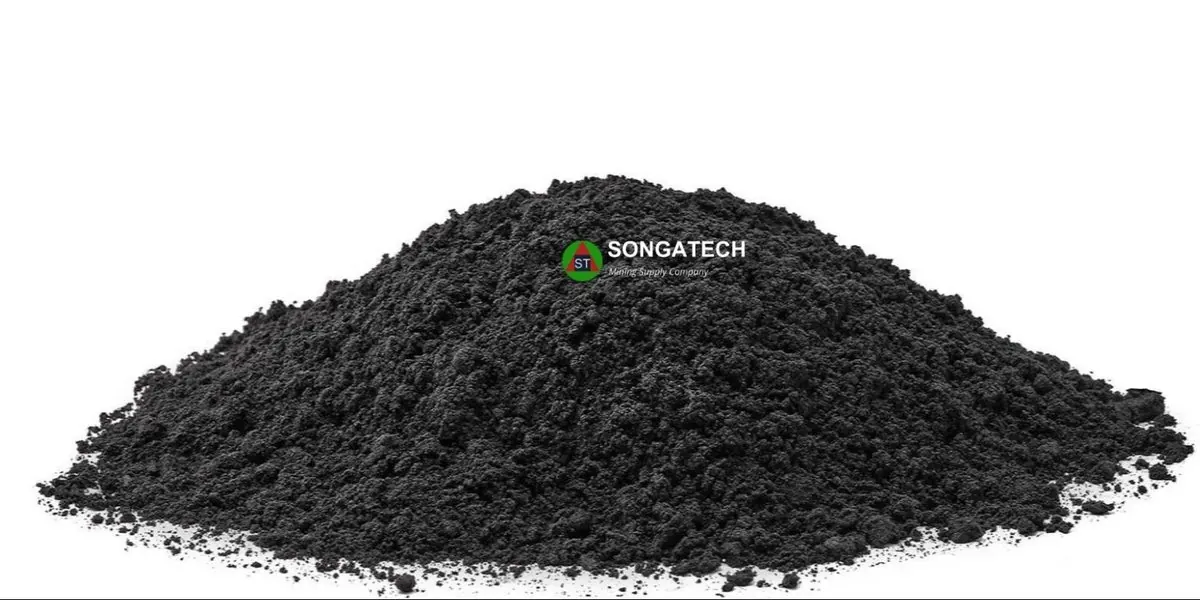
Deslimed coal is mixed with a magnetite suspension and pumped to dense medium cyclones. Coal is cut at relatively low densities, typically 1.4 to 1.8 RD, so ground magnetite (not ferrosilicon) is the standard medium. Cyclone duties need a fine grade so the medium stays stable and the cut stays sharp; Songatech magnetite powder is supplied as a fine grade at about 90% passing 45 µm for cyclones and a standard grade at about 90% passing 75 µm for drums, with a certificate of analysis for PSD, density and moisture.
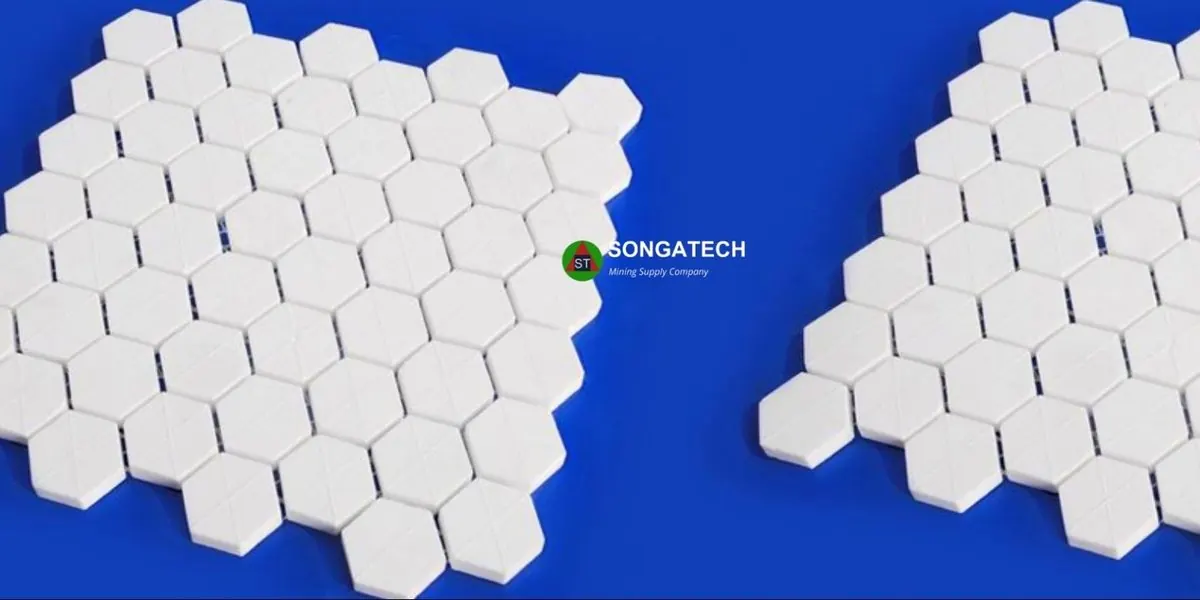
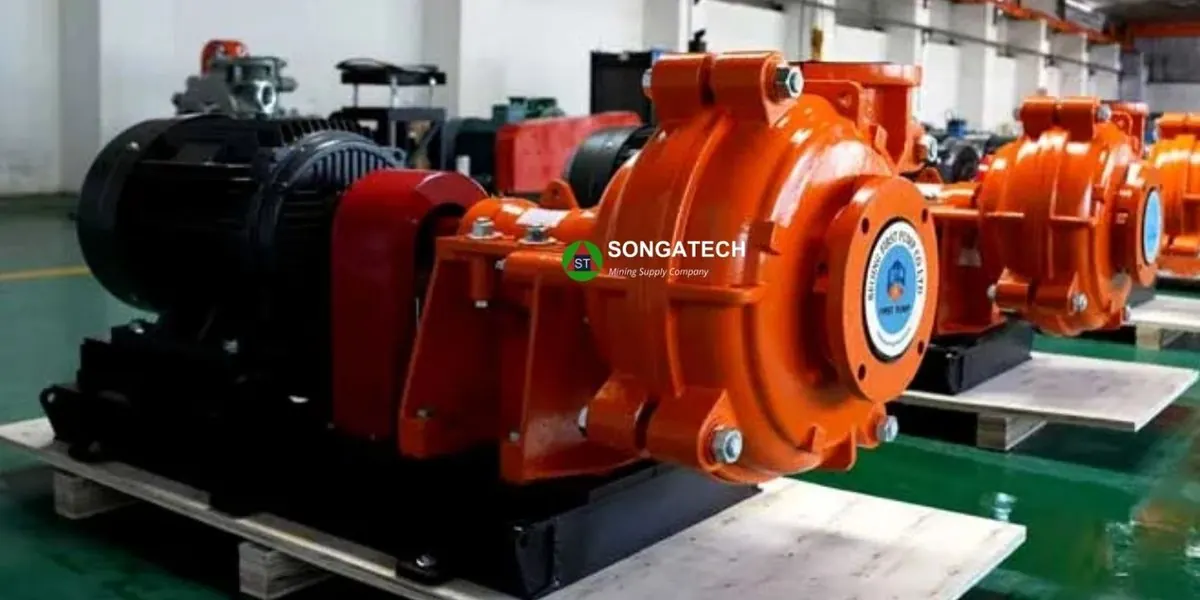
A common design rule is to feed a DMS cyclone at an inlet head of roughly nine times the cyclone diameter. That pressure, the magnetite in suspension and the sharp coal and stone make the cyclone, the feed pipe bends and the correct medium pump some of the fastest wearing items in the plant. Alumina ceramic tiles and the high chrome wet ends on slurry pumps are the usual answer.
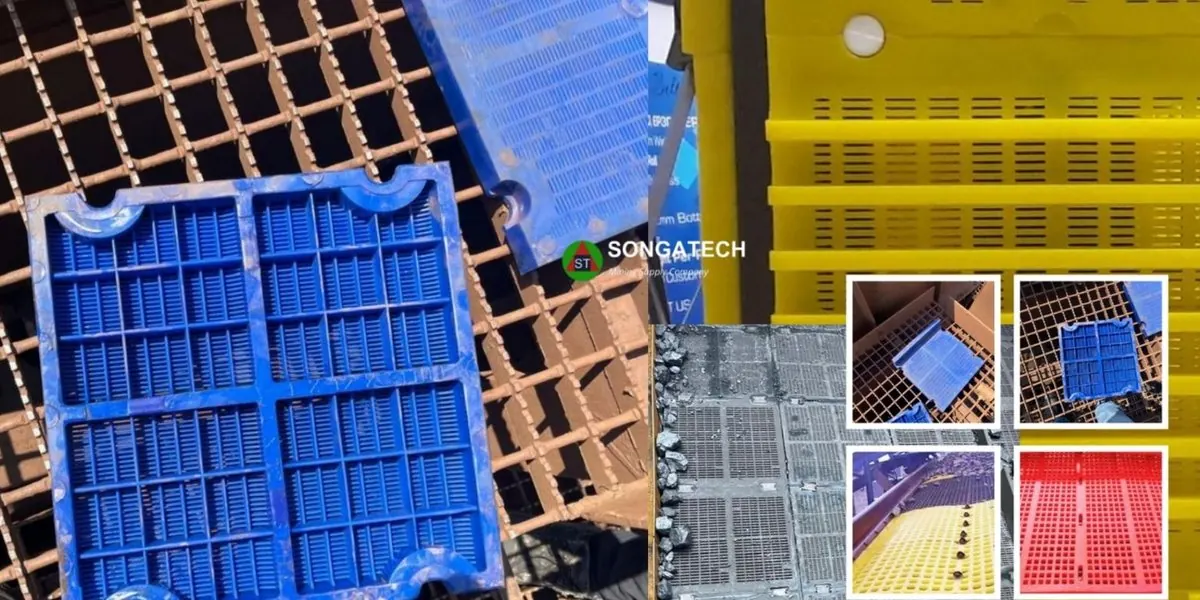
Product and discard from the cyclones pass over drain and rinse screens. The drain section returns correct medium to the sump; spray water then rinses adhering magnetite off the coal, and that dilute medium goes to magnetic separators and back to the circuit. A torn or worn panel lets coal and magnetite straight through. Slotted polyurethane panels and wedge wire in the 0.25 to 2 mm slot range, from the screen panels range, are the normal choice. Our guide to slotted screening panels explains slot size and orientation.
Desliming screen underflow goes to a classifying cyclone cluster. The underflow, roughly 0.1 to 1 mm, feeds coal spirals; the overflow carries ultrafine slimes to flotation or to the thickener. Spirals wash with water only, so they cut less sharply than dense medium but cost little to run. Songatech coal fines spirals are set up for 0.15 to 2.0 mm fractions, and polyurethane hydrocyclones with replaceable spigots hold the classifying cut. The fine coal circuit is covered in detail in our article on coal washing spirals and heavy medium separation.
Spiral product is dewatered on sieve bends, high frequency screens and centrifuges before joining the coarse product. Thickener underflow is pumped to a slimes facility or a filter, and the overflow becomes plant water. From there, product, middlings and discard all leave on conveyors, often over long distances to stockpiles and rapid load-out stations.
| Stage | Typical equipment | Wear or consumable problem | Songatech products that fit |
|---|---|---|---|
| Crushing and sizing | Rotary breaker, sizers, scalping screen, conveyors | Impact on screen decks and belts, stone and tramp steel | Rubber impact panels, spring steel wire mesh, conveyor belts |
| Desliming | Wet multislope or banana screen | Panel wear at the feed end, pegging of slots | Polyurethane screen panels and wedge wire |
| Dense medium separation | DMS cyclones or drum, correct medium sump and pump | Medium losses, cyclone and pipe bend wear, pump wear | Magnetite powder, ceramic tiles, slurry pumps |
| Medium recovery | Drain and rinse screens, magnetic separators, densifier | Worn or torn panels let magnetite escape with product | Slotted PU and wedge wire panels |
| Fines classification | Classifying cyclone cluster, distributor | Spigot and cone wear move the cut point | PU hydrocyclones and spigots, distributors |
| Fine coal washing | Coal spirals, sometimes teeter bed separators | Uneven feed split, worn splitters and troughs | Coal fines spirals, launders |
| Dewatering | Sieve bends, high frequency screens, centrifuges | Fine slot wear and blinding | Wedge wire dewatering panels |
| Thickening and discard | Thickener, underflow pumps, discard conveyors | Abrasive underflow, belt cover wear | Slurry pumps, conveyor belts |
Cyclones normally need a fine magnetite, about 90% passing 45 µm, because it keeps the medium stable and the cut sharp. Drum and bath separators can run on a standard grade of about 90% passing 75 µm.
The usual causes are worn or torn drain and rinse panels, blocked rinse sprays, poor magnetic separator performance and too many fines reaching the medium because the desliming screen is worn. Check those four before changing the magnetite grade.
In plants that also run DMS cyclones, spirals typically treat about 0.1 to 1 mm coal. Songatech coal fines spirals are designed for 0.15 to 2.0 mm fractions. Finer material goes to flotation or to the thickener.
Coal is separated at about 1.4 to 1.8 RD, which magnetite reaches easily at a lower cost. Ferrosilicon is used where the separation density is much higher, such as diamonds and iron ore.
Slotted polyurethane panels or wedge wire with slots in the 0.25 to 2 mm range, with slots running in the direction of flow. Send the screen make, deck layout and current slot size so the panel and fixing system can be matched.
For a quote on magnetite, screen panels, spirals or wear linings for a coal plant, send your flowsheet stage and current specification through the Songatech contact page, or browse the full product range.
Send us the product, quantity and site. For linings and nozzles, include drawings or dimensions and we will match them to your equipment.