



Joint ventures and a strong regional presence let us offer
tailored on-site support across South Africa.

Chrome and platinum group metal (PGM) plants in South Africa treat ore from the same geological body, the Bushveld Complex, and many of them share circuits. UG2 ore carries both PGMs and a large share of chromite, so a modern PGM concentrator usually has a chromite spiral plant attached, while dedicated chrome mines on the LG6 and MG seams run spiral plants of their own. This page explains those circuits and maps the Songatech products used at each stage.
The Bushveld Complex has three limbs. The western limb runs from Brits through Marikana and Rustenburg to Northam. The eastern limb runs along the Steelpoort valley past Burgersfort towards Mashishing (Lydenburg). The northern limb around Mokopane carries the Platreef, mined in large open pits. Three ore types matter for processing:
For towns, distances and the products most used in each area, see mining supplies in North West and mining supplies in Limpopo.
PGM smelters set a low limit on chrome in the flotation concentrate, because chrome spinel builds up as a layer in the furnace. UG2 plants therefore try to keep chromite out of the float concentrate. Coarse, dense chromite grains respond well to gravity separation, so spirals placed on the right stream remove chromite before or after flotation and turn it into a saleable product.
The product target is a fine concentrate. A widely used price specification for South African UG2 chrome concentrate is 42% Cr2O3 basis (40% minimum), a Cr to Fe ratio of at least 1.2 and at least 95% below 1 mm. Chemical and foundry grade products sit higher, typically in the mid-40s Cr2O3. Every stage in the circuit below is there to hit that grade without losing too much chromite to the tailings.

Feed is either a stream inside the concentrator, milled UG2 or LG6 ore, or old PGM tailings reclaimed from a dam. Either way it is screened to remove trash and oversize, then deslimed in cyclones. Slimes cannot be separated on a spiral and they raise pulp viscosity, so a worn cyclone spigot that lets the cut drift is one of the most common reasons a chrome plant loses grade. Songatech polyurethane hydrocyclones are built in bolted sections with replaceable spigots and apex liners, so the worn part can be changed on its own.
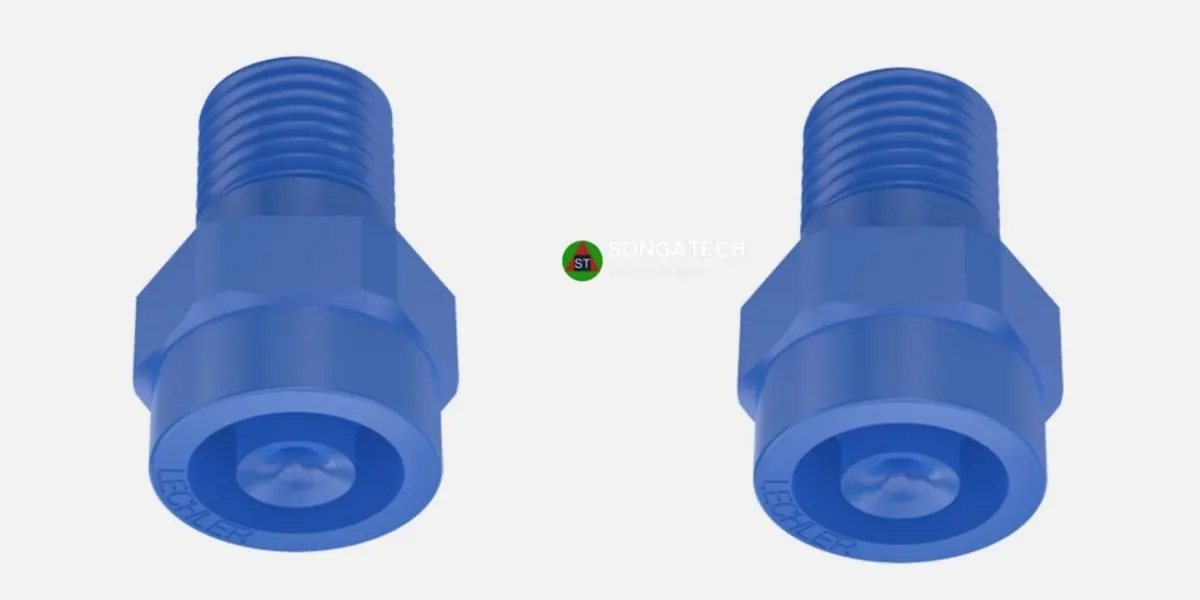
Spirals only perform when each start receives the same flow and density. Distributors split the deslimed feed to the banks, and classifier nozzles control flow in classification and distributor systems. Songatech's ceramic nozzles have a standard 2.5 mm orifice (2 to 4 mm on request) and a typical life of up to two months in abrasive chrome duty, which makes nozzle change-out a planned task rather than a breakdown.
Roughers recover most of the chromite at a low grade; cleaners upgrade that concentrate to sales grade; scavengers re-treat middlings or tails. Songatech chrome spirals are available in rougher, cleaner and scavenger profiles, with 5 to 7 turns, 600 to 950 mm diameters, single, double or triple starts and adjustable splitters, for a capacity of roughly 0.3 to 4 t/h per start depending on the ore. Very fine tailings are harder: published work on ultrafine chrome tailings shows that splitting the feed by size and treating each fraction separately improves recovery. Our guide to setting up an efficient chrome spiral plant covers bank layout and commissioning.
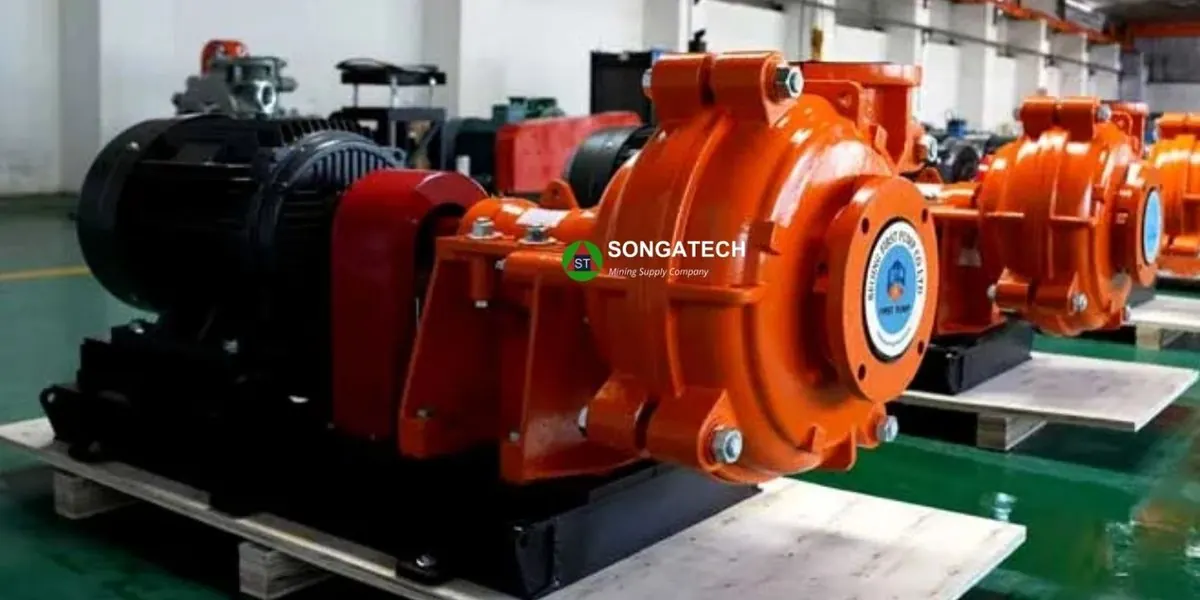
On the PGM side, ore is milled with steel media and floated in stages. Forged grinding balls of 100 to 125 mm suit primary and SAG duties, and cast high chrome balls suit regrind. Every transfer between stages runs through a pump, a launder or both, and chromite is dense and abrasive, so high chrome slurry pumps and ceramic or rubber lined launders and distributors wear quickly in these plants.
| Stage | Typical equipment | Wear or consumable problem | Songatech products that fit |
|---|---|---|---|
| Underground mining | Conventional stoping and mechanised bord and pillar on UG2, LG6 and MG seams | Hanging wall control in development ends and intersections | Roof bolts, Oslo straps |
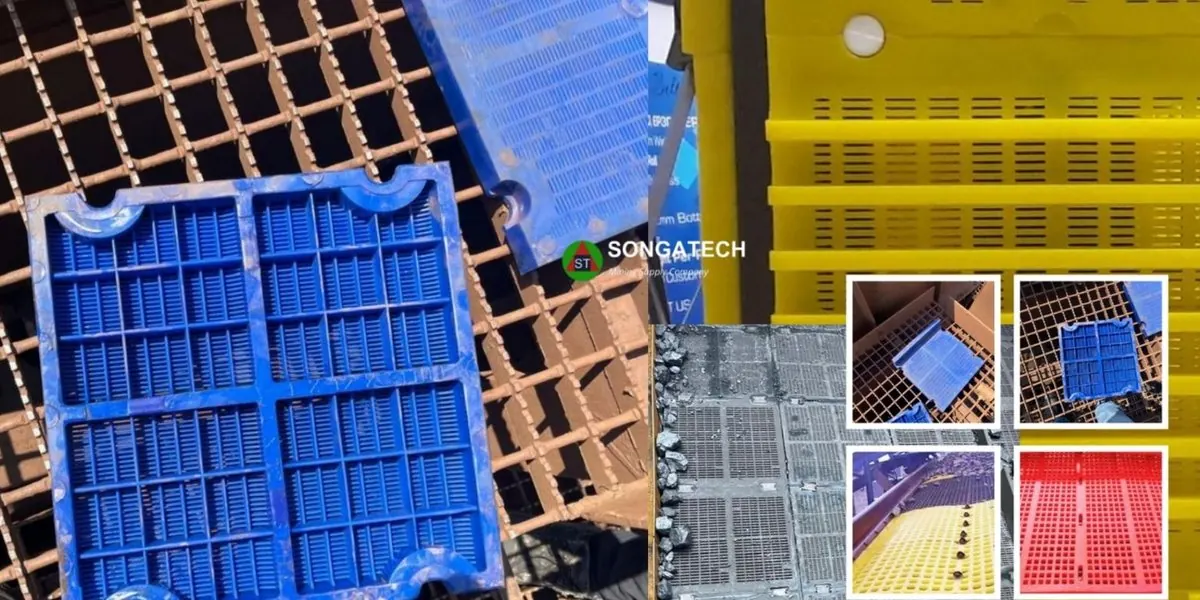
| Crushing and screening | Jaw and cone crushers, scalping and sizing screens | Impact and abrasion on decks | Rubber and PU panels, wire mesh |
| Milling | Ball mills, rod mills in older chrome plants, SAG mills on some PGM plants | Media wear and breakage, liner wear | Forged and cast grinding balls, milling rods |
| Classification and desliming | Cyclone clusters, classifiers | Spigot wear, unstable cut, nozzle wear | PU hydrocyclones, classifier nozzles |
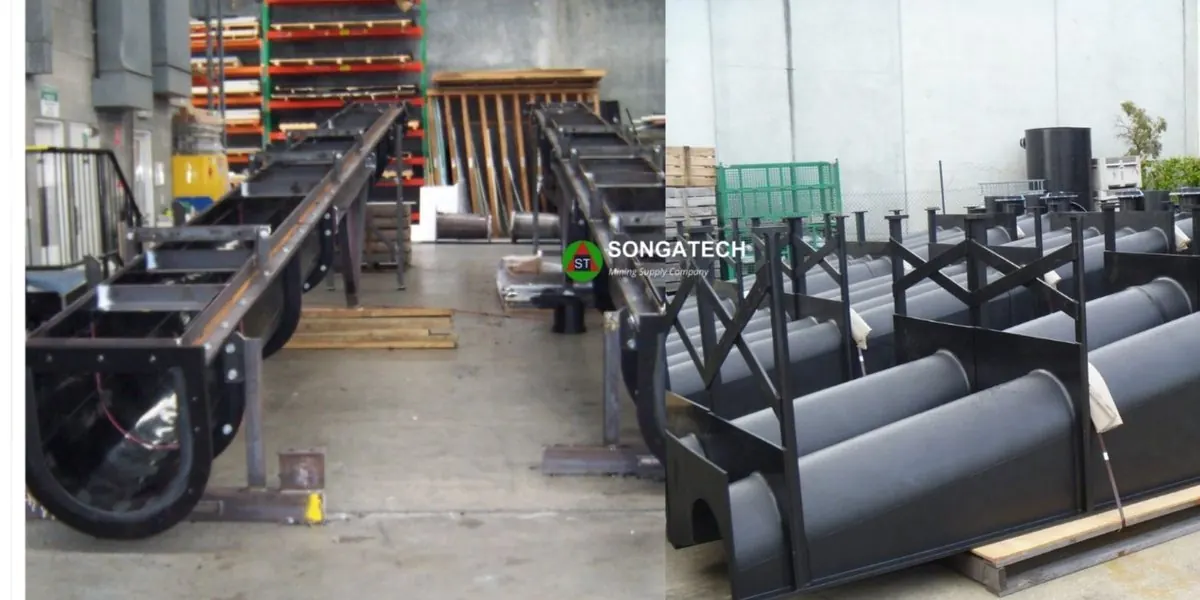
| Chromite gravity recovery | Rougher, cleaner and scavenger spiral banks, distributors | Uneven feed split, worn troughs and splitters | Chrome spirals, distributors and launders |
| PGM flotation | Flotation cells, regrind mills, concentrate thickener | Launder and pump wear, chromite reporting to concentrate | Flotation launders, slurry pumps, ceramic linings |
| Dewatering and tails | Dewatering screens, thickeners, tailings pumps | Fine slot wear, abrasive tailings lines | Wedge wire panels, slurry pumps |
A widely used price specification for South African UG2 chrome concentrate is 42% Cr2O3 basis with a 40% minimum, a Cr to Fe ratio of at least 1.2 and at least 95% below 1 mm. Buyers may set their own limits, so check the offtake contract.
Smelters limit chrome in the PGM concentrate because chrome spinel builds up in the furnace. Removing chromite by gravity protects the smelter and creates a second saleable product.
Chrome needs dedicated rougher, cleaner and scavenger profiles rather than one general profile. Songatech chrome spirals are built for 0.5 to 2.0 mm fractions in rougher duty, with adjustable splitters to set grade and yield.
Songatech ceramic classifier nozzles have a typical life of up to two months in abrasive chrome duty. Porcelain and polyurethane options suit lighter or impact-prone duties.
Development ends and stopes use roof bolts, often resin anchored rebar or mechanical anchors, with Oslo straps and mesh where the hanging wall is jointed. The support pattern is set by the mine’s own support standard.
For a quote on chrome spirals, nozzles, cyclones or pumps, send your circuit details through the Songatech contact page or browse all mining products.
Send us the product, quantity and site. For linings and nozzles, include drawings or dimensions and we will match them to your equipment.